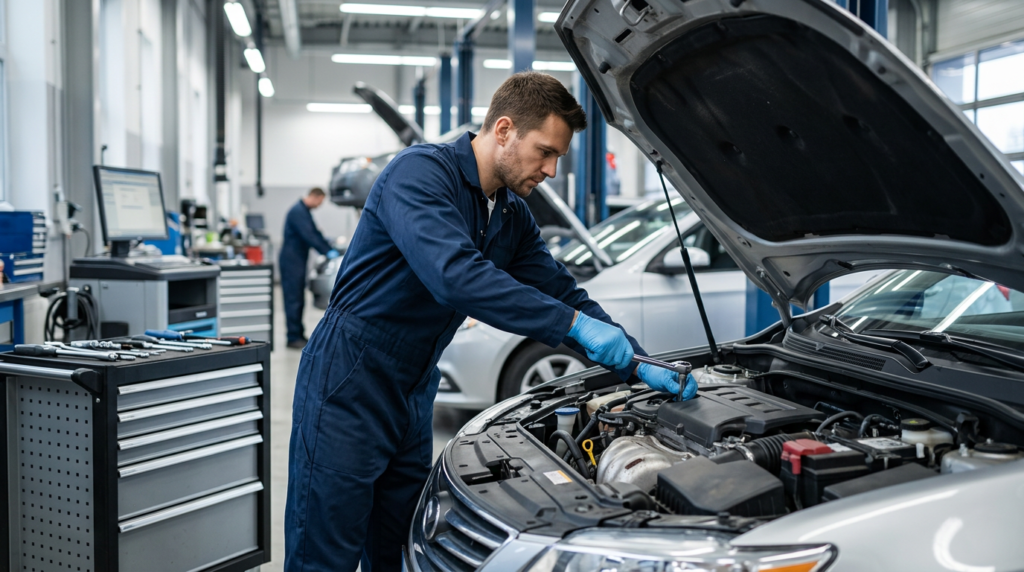
Quick answer: To find reliable car repair in Buford, GA, vet a few shops with a quick checklist: ask on the phone if they provide written estimates, what diagnostic steps they use (scan data, pressure tests, road test), and how they handle approvals for added work. Request the estimate and warranty terms in writing. Red flags include vague “needs it” claims, pressure to decide immediately, and refusing to show test results or old parts.
How to Pick a Shop You Can Trust
Start with communication. A dependable shop will ask good questions (when the noise happens, whether the problem changes with speed or braking, any warning lights) and explain what tests they’ll run before replacing parts. You should get a written estimate that separates parts and labor and calls out any add-ons like shop supplies or diagnostic time.
Look for a process, not promises. For car repair Buford GA, the best sign is a shop that can show you why a repair is needed—photos of leaks, measured brake pad thickness, battery test results, or scan data for a check-engine light—then explain options (repair now vs. monitor) and the risks of waiting.
Pay attention to how they handle uncertainty. Some issues are intermittent, like a random misfire or a rattle that only happens on cold starts. A trustworthy shop will tell you what they know, what they don’t, and what the next diagnostic step costs before moving forward.
Common Repairs and What the Symptoms Usually Mean
Brake problems often show up as squealing, grinding, a soft pedal, steering wheel shake while braking, or the car pulling to one side. Those symptoms can point to worn pads, damaged rotors, sticking calipers, or brake fluid issues. Ask whether the shop is measuring rotor thickness and checking caliper slide pins, not just swapping pads.
Check-engine lights can mean anything from a loose gas cap to ignition or fuel issues. A proper diagnosis usually includes scanning codes, reviewing freeze-frame data, and verifying the fix with a drive cycle or readiness monitors. If someone offers to “just replace the sensor” based only on a code, be cautious—codes are clues, not conclusions.
Overheating, coolant smell, or recurring low coolant can come from leaks, a failing thermostat, radiator issues, or water pump problems. The right approach is pressure testing the cooling system and checking for combustion gases in coolant when symptoms suggest a head-gasket concern.
What to Do Next: Monitor, Schedule Soon, or Tow
DIY/monitor: If the check-engine light is on but the car drives normally (no shaking, no overheating, no loud new noises), you can often drive short trips while you schedule diagnostics soon. Tighten the gas cap and watch for changes, but don’t ignore the light for weeks—small issues can snowball.
Schedule soon: Brake squeal without grinding, mild vibration, a small coolant loss you can top off, or a check-engine light with minor drivability changes (slightly rough idle, reduced fuel economy) usually means book an appointment in the next few days. Keep trips shorter, avoid heavy loads, and tell the shop exactly what you noticed and when it happens.
Tow immediately: Grinding brakes, a brake pedal that sinks, strong burning smell, overheating/temperature gauge in the red, steam from the hood, coolant pouring out, or a flashing check-engine light with shaking/misfiring are stop-now situations. Continuing to drive can turn a repair into major engine or brake damage.
Planning Maintenance So Repairs Don’t Surprise You
Most expensive repairs start as small warnings: a slow oil seep, a slight vibration, a battery that tests weak, or tires wearing unevenly. If you catch those early, you can often avoid breakdowns and secondary damage. Keep records of oil changes, brake service, tire rotations, and any warning lights—patterns matter.
If you’re buying a used car, a pre-purchase inspection is usually money well spent. A typical inspection includes a road test, visual leak check, brake and tire measurement, battery/charging test, and a scan for stored or pending fault codes.
Call a few shops and compare written estimates and warranty terms; ask to see test results/photos and any replaced parts before approving work. Team Ryan Automotive is one option in Buford if you’re comparing local repair shops.