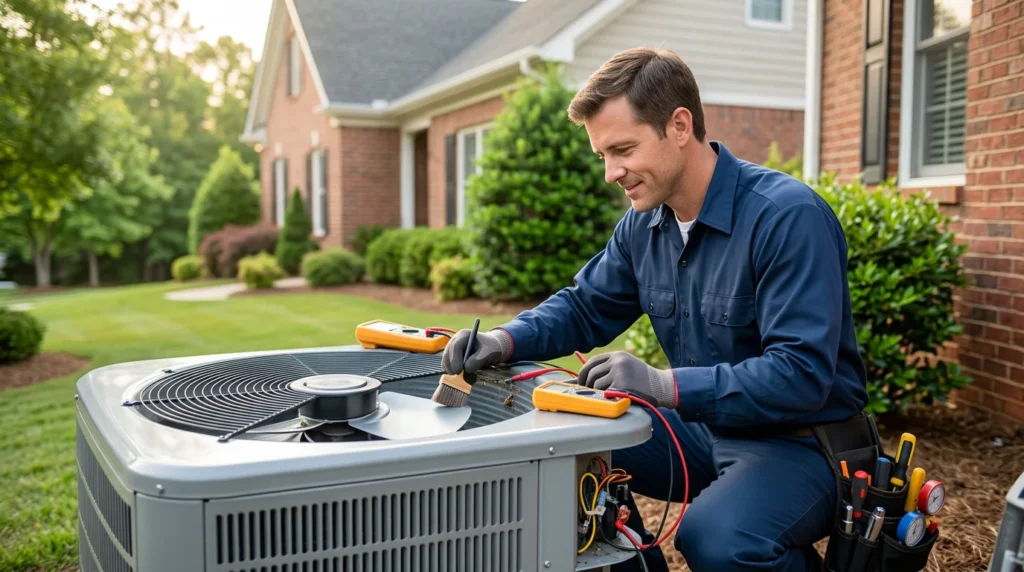
Quick answer: Most homes in Watkinsville do best with AC maintenance once a year, ideally in spring before steady heat arrives. If your system runs nearly nonstop, is older, or you have pets or allergies, a second check in fall can help. Regular maintenance keeps airflow and refrigerant performance on track, reduces nuisance breakdowns, and helps you catch small issues before they damage major parts.
A Practical Maintenance Schedule for Watkinsville Homes
For a typical single-family home, one professional tune-up per year is a solid baseline. Spring is the sweet spot because it gives you time to correct problems before the first 90-degree week. If you want to set it and forget it, book your air conditioning maintenance Watkinsville appointment for March through May and you’re usually in good shape.
Consider twice-yearly service if your AC is older, you’ve had past refrigerant leaks, you run the system long hours, or you have pets that load the filter with hair and dander. A fall visit doesn’t replace spring prep, but it can catch wear from a hard summer—like a weakening capacitor or a blower wheel getting dirty—before it turns into a no-cool call next season.
What a Good AC Maintenance Visit Should Include
A real maintenance visit is more than “hose off the outdoor unit.” You want a tech to verify airflow, check electrical components, and look for early warning signs. Common items include inspecting the contactor and capacitor, tightening electrical connections, measuring temperature split across the coil, confirming safe condensate drainage, and checking that the thermostat and safety controls respond correctly.
Coil condition matters in Georgia humidity. A dirty indoor evaporator coil can quietly reduce cooling and raise indoor moisture, while a clogged outdoor condenser coil can drive up head pressure and strain the compressor. Filter choice also matters: a filter that’s too restrictive can reduce airflow and contribute to icing. A maintenance visit should include guidance on the right filter type and replacement interval for your setup.
Warning Signs You Shouldn’t Wait for Your Next Tune-Up
Schedule service sooner if you notice weak airflow, rooms that won’t cool evenly, frequent cycling on and off, or a sudden jump in runtime. Unusual sounds—buzzing at startup, rattling, or a humming outdoor unit that struggles to start—often point to electrical issues like a failing capacitor or a loose component.
Water around the indoor unit, musty odors, or higher indoor humidity can signal a clogged drain line, a dirty coil, or airflow problems. Ice on the refrigerant line or indoor coil is another “stop and call” sign; it can come from low airflow or low refrigerant, and running it that way risks compressor damage. If your breaker trips or you smell a burnt odor, shut the system off and get it checked.
What You Can Do Between Professional Visits
Replace or wash filters on a regular rhythm; many households land somewhere between every 1–3 months, but check sooner during heavy use or if you have pets. Keep supply vents open and unobstructed, and make sure return grilles aren’t blocked by furniture or rugs. Outside, keep leaves and grass clippings from packing into the condenser coil, and maintain a clear buffer around the unit so it can breathe.
Also pay attention to condensate: if you can safely see the drain outlet, verify it’s dripping during cooling season. If you use a high-efficiency pleated filter and notice whistling or reduced airflow, step down to a less restrictive option and ask a pro to confirm static pressure. For a thorough inspection and a maintenance plan that fits your system, Billy Butler HVAC is a good place to get help.