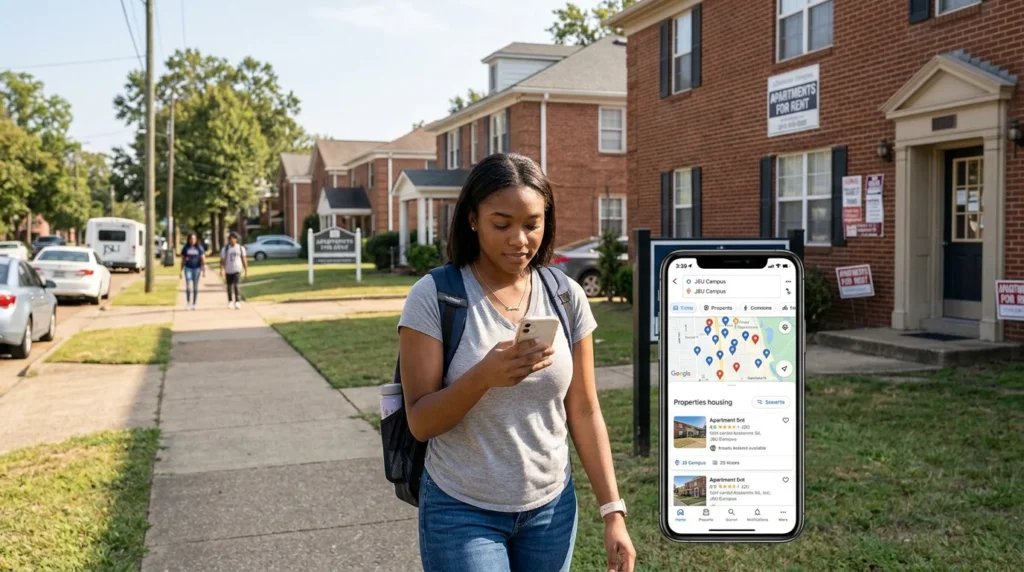
Quick answer: Choose off-campus housing near JSU by comparing commute style (walk vs drive), lease risk (joint vs individual), and what’s included (furnishing, utilities, fees). Ask targeted questions about parking permits, lighting and late-night access, guest parking, noise during campus events, and maintenance response expectations. Confirm guarantor rules, subletting/reletting terms, and all charges in writing before you sign.
Start With Location, Layout, and Lease Style
Start by deciding how you’ll get to campus most days: walking, biking, driving, or rideshare. That choice affects your time, stress level, and budget more than almost anything else. If you’re browsing off campus housing near JSU campus, treat “close” as something you verify yourself with a real test route at the times you’ll actually travel (morning classes, evening labs, game days).
Next, think about layout in practical terms: Do you need a private bedroom to study and sleep, or are you fine sharing? More roommates can lower your share of rent, but it can raise conflict risk over cleaning, guests, and noise. Ask how sound carries between bedrooms and common areas, and whether the community has quiet-hour policies that are enforced.
Lease style is the big risk lever. A joint lease can mean you’re responsible for the full rent if a roommate stops paying. An individual lease (sometimes called by-the-bed leasing) can limit that exposure, but you still need to understand how roommate matching works and what happens if someone moves out mid-year.
A JSU-Focused Comparison Checklist (Questions to Ask on Tours)
Use the same checklist for every property so you’re comparing apples to apples. These questions are specific to the rhythm around Jacksonville State University and can save you from surprises after move-in.
Ask: Is it truly walking distance for your schedule, or will you end up driving most days? If you drive, what parking is provided, and do you also need a campus permit? How does parking work during big campus events—do lots fill up, are there towing rules, and where can guests park without hassle?
Ask about late-night realities: Are paths and parking areas well-lit, are entrances controlled, and what’s the policy for after-hours lockouts? Ask about noise expectations during game days and campus events—what’s quiet-hour enforcement like, and where are the loudest buildings or courtyards? Finally, ask how maintenance requests are submitted and what “normal” response time looks like for urgent issues (AC outages, leaks) versus non-urgent fixes, and whether you can see that policy in writing.
Student Leasing Watch-Outs: Fees, Guarantors, and Roommate Scenarios
Student leases can be straightforward, but the fine print is where people get burned. Joint lease risk scenario: one roommate drops out or stops paying, and everyone else has to cover the gap to avoid late fees or eviction. Individual leasing can reduce that risk, but watch for other obligations like shared-damage charges for common areas, or rules that still hold roommates collectively responsible for cleanliness and conduct.
Confirm guarantor requirements early. Many student-focused rentals require a guarantor, and the paperwork timing matters—waiting can cost you your preferred floor plan or roommate grouping. Also ask about subletting or reletting: Is it allowed, what are the fees, do you have to find the replacement tenant, and does management have approval rights? Get those answers in writing so you’re not stuck paying for months you won’t live there.
Roommate matching policies deserve extra scrutiny. Ask what criteria are used (sleep schedule, smoking, pets, study habits), whether matches are guaranteed, and what the process is if the match goes badly. Also confirm, in writing, what’s included in rent (furniture, internet, trash, water, electricity caps if any) and what fees could be added (application, admin, parking, pet, late fees).
A Neutral Next Step to Pick the Right Place
Shortlist three properties that meet your must-haves (commute style, budget ceiling, lease type). Tour each one, and do a quick reality check: walk or drive the route to campus, stand in the parking areas after dark, and look for practical cues like lighting, signage, and where guests would actually park.
Before you apply, request the lease terms and utility responsibilities in writing and compare total monthly cost: rent plus average utilities, parking, pet fees, and any one-time charges. If you want to include The Pointe at JSU in your shortlist, run it through the same checklist and paperwork review so you can compare it fairly against the other options.